
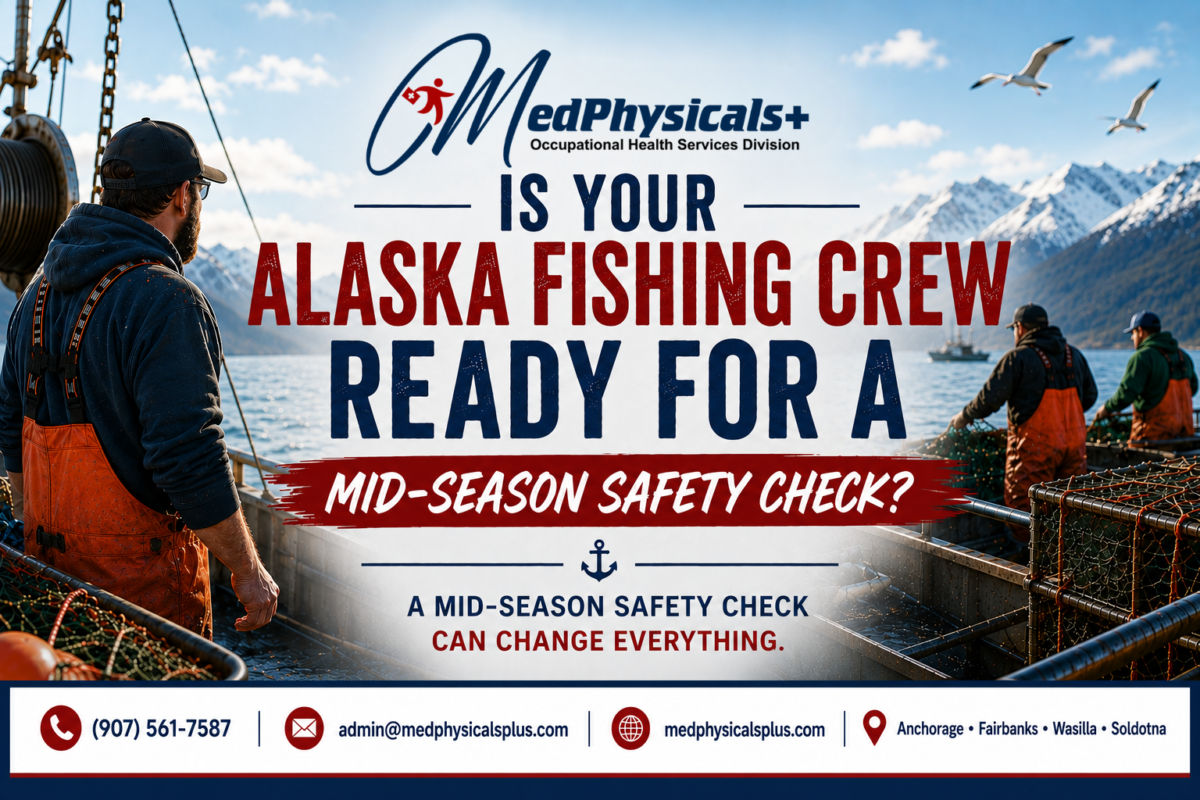
Commercial fishing is one of the most important industries in Alaska, but it is also one of the most hazardous occupations in the United States. Crews face risks from vessel disasters, falls overboard, heavy deck machinery, long work hours, harsh weather, and physically demanding tasks.
By July, many fishing operations are in full swing. As work becomes routine, fatigue, changing conditions, and production demands can make it easier for safety practices to slip. A mid-season refresher helps crews stay focused on the hazards they face every day.
PFD Use Should Not Be Optional During High-Risk Work
Personal flotation devices, or PFDs, are one of the most effective ways to improve survival after a fall overboard. According to NIOSH, falls overboard are a major contributor to fatalities in commercial fishing. NIOSH also emphasizes that wearing a PFD is the most important step a person can take to survive a fall overboard.
Employers should make sure crew members have properly fitting PFDs, understand when they should be worn, and inspect them regularly throughout the season. A PFD can only provide protection when it is worn.
Winch Safety Needs More Than One Reminder
Winches and other deck machinery are essential to commercial fishing, but they can also cause serious injuries. Moving cables, rotating equipment, and fishing lines create entanglement, crushing, and struck-by hazards if proper precautions are not followed.
A safety refresher should review safe positioning around machinery, the importance of securing loose clothing, emergency stop locations, equipment inspections, and clear communication while equipment is operating. Even experienced crews benefit from regular reminders because a single mistake around moving machinery can have life-changing consequences.
Emergency Drills Should Be Practiced Before They Are Needed
Emergency drills are most effective when they become routine. During an actual emergency, there is little time to decide who should do what.
Crews should regularly review procedures for man overboard incidents, fires, flooding, medical emergencies, emergency communication, and abandoning the vessel. Practicing these scenarios helps crews respond more confidently when every second counts.
Why July Is the Right Time to Refresh Training
Mid-season is an ideal time to reinforce safe work practices. By July, many crews have already spent weeks on the water, making fatigue and complacency more likely.
A brief safety meeting or refresher training can help identify potential hazards, reinforce safe work habits, and remind crews that safety is an essential part of every fishing operation.
Keeping Safety a Priority
Commercial fishing will always involve risk, but preparation helps reduce it. Reviewing PFD use, winch safety, and emergency procedures during the busiest part of the season can help employers strengthen their safety programs and better protect their crews.
At MedPhysicals Plus, we help employers throughout Alaska support workforce readiness through occupational health services, including DOT physicals, fit-for-duty evaluations, and other employer health services. While commercial fishing safety training should be provided by qualified maritime safety organizations, maintaining a healthy, fit-for-duty workforce is another important part of reducing workplace risk.
We proudly serve employers across Alaska with locations in Anchorage, Fairbanks, Wasilla, or Soldotna. To learn more about our employer services, contact MedPhysicals Plus at admin@medphysicalsplus.com, call (907) 561-7587, or visit medphysicalsplus.com.