
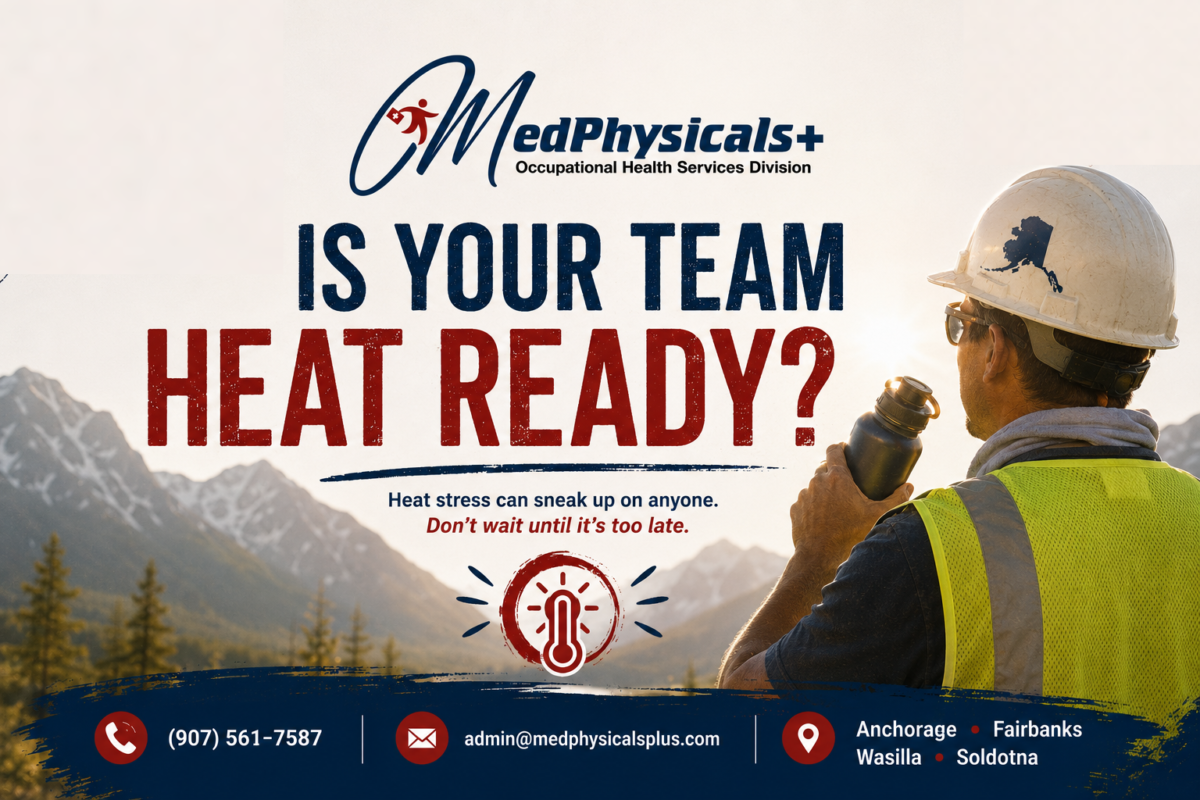
Yes, Heat Stress Happens in Alaska
Most employers do not connect Alaska with heat stress. Cold weather, snow, ice, and winter hazards usually get more attention. However, during the summer, heat-related illness can still become a real workplace safety issue.
The risk is easy to overlook because heat stress does not always begin as an emergency. A worker may first seem tired, distracted, dizzy, or slower than usual. On a busy jobsite, those signs can be mistaken for normal fatigue until the situation becomes more serious.
“It’s Not Even That Hot”
Heat stress is not only caused by extreme temperatures. It can happen when the body builds up more heat than it can release, especially during physical work, direct sun exposure, limited airflow, or long shifts.
For Alaska employers, this matters during summer outdoor work. Construction crews, road workers, utility teams, transportation employees, oil and gas workers, and remote-site crews may spend long hours outdoors while performing physically demanding tasks. Even mild-looking weather can become harder on the body when the work is strenuous.
PPE Can Make Workers Hotter Than the Weather Feels
Personal protective equipment protects workers from workplace hazards, but it can also increase heat strain. Respirators, coveralls, gloves, hard hats, and protective clothing can trap body heat and reduce airflow around the body.
This does not mean employees should avoid required PPE. It means employers should account for the additional heat burden. Workers wearing protective gear may need more frequent hydration, planned rest breaks, shaded or cool-down areas, and closer monitoring during warmer conditions.
The Warning Signs Are Easy to Miss
Heat-related illness may begin with symptoms such as headache, dizziness, nausea, heavy sweating, muscle cramps, weakness, unusual fatigue, or difficulty concentrating. These symptoms can affect how safely a worker performs the job.
More serious symptoms, including confusion, fainting, slurred speech, seizures, or loss of consciousness, may indicate a medical emergency. A worker who appears disoriented, unsteady, or “not themselves” should be removed from the heat and evaluated immediately.
Water Only Works If Workers Actually Drink It
Providing water is important, but availability alone does not always prevent dehydration. Workers may delay drinking water because they are focused on the task, trying to finish a job, or waiting until they feel thirsty.
Employers should make water easy to access and encourage regular hydration throughout the shift. This is especially important for employees working outdoors, performing heavy labor, wearing PPE, or working at remote jobsites where access to shade and cooling may be limited.
What Alaska Employers Should Do Before It Becomes a Problem
A strong heat stress prevention plan does not need to be complicated. Employers should consider water access, rest breaks, shade or cooling options, supervisor awareness, worker training, and procedures for responding when symptoms appear.
The bigger issue is recognizing the hazard early. If supervisors assume heat stress cannot happen in Alaska, they may miss warning signs that affect worker health, concentration, reaction time, productivity, and overall jobsite safety.
How MedPhysicals Plus Can Help
MedPhysicals Plus helps employers throughout Alaska support workforce readiness through occupational health services such as fit-for-duty evaluations. For heat-related workplace concerns, these services can help employers make more informed decisions when worker health, physical job demands, PPE use, and safety risks overlap.
With locations in Anchorage, Fairbanks, Wasilla, or Soldotna, MedPhysicals Plus works with employers across Alaska. To learn more, visit medphysicalsplus.com, email admin@medphysicalsplus.com, or call (907) 561-7587.