
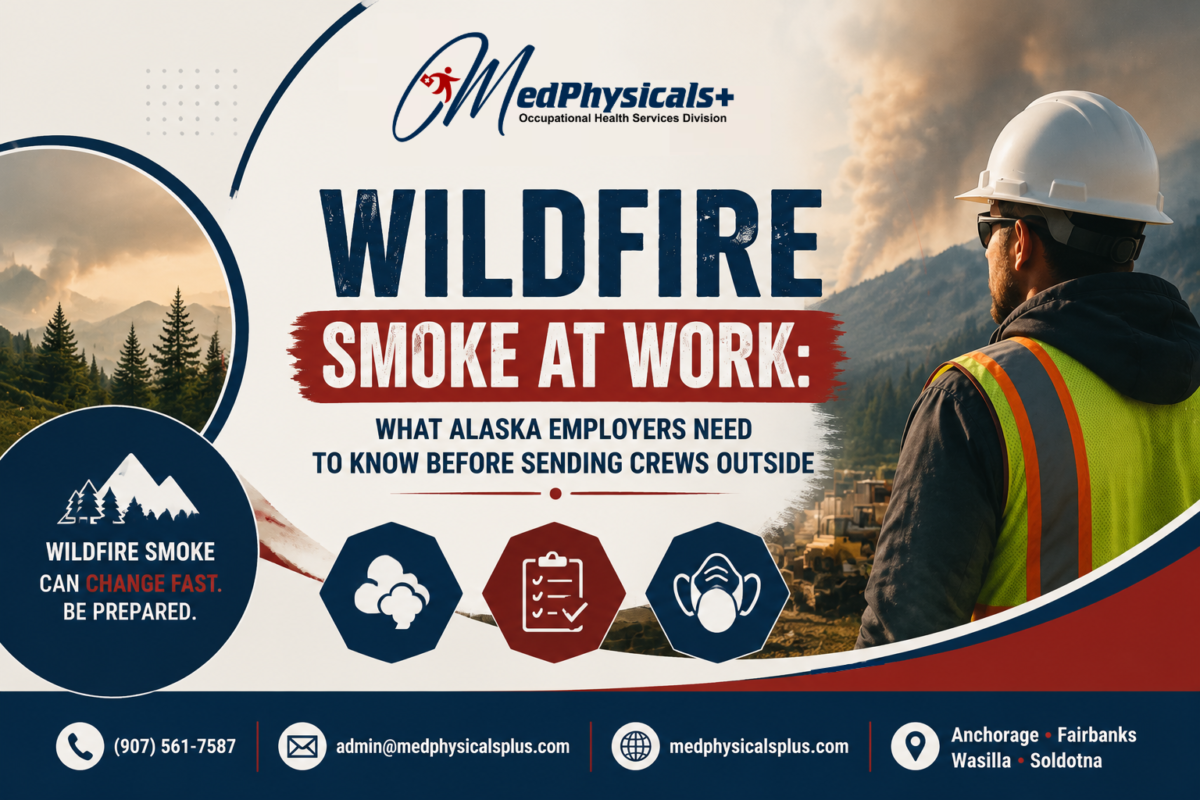
Many Alaska employers are used to managing changing weather conditions, but wildfire smoke creates a different workplace challenge. Outdoor crews, drivers, and remote jobsite workers may still need to complete their work even when air quality conditions begin to change.
The question is not only whether work can continue. Employers also need to consider how to protect employees who spend extended periods outdoors or work at remote locations when air quality changes.
Wildfire Smoke Is More Than a Hazy Sky
Wildfire smoke contains fine particles called PM2.5 that can travel deep into the lungs. For workers who spend extended periods outdoors, exposure can add up throughout the workday.
Smoke exposure may cause coughing, throat and eye irritation, shortness of breath, and other breathing concerns. Employees with existing respiratory or heart conditions may face additional challenges when air quality is poor.
A Safety Plan Starts Before Smoke Conditions Get Worse
Wildfire smoke conditions can change quickly depending on wildfire activity, wind, and weather. A worksite that starts the day with acceptable conditions may experience different air quality later in the shift.
Employers should monitor air quality and have a plan for when conditions change. This may include adjusting schedules, changing certain tasks, reducing unnecessary outdoor exposure, or providing cleaner areas for employee breaks when possible.
The Alaska Department of Environmental Conservation provides wildfire smoke information and air quality resources to help employers and communities track conditions across the state.
Remote Jobsites Require Additional Planning
For many Alaska industries, outdoor work cannot simply stop when smoke arrives. Construction crews, transportation teams, and remote operations may need to continue working while managing changing air quality conditions.
Employers should plan ahead by knowing how conditions will be communicated, where employees can take breaks, and what steps workers should follow if they experience symptoms related to smoke exposure.
Respiratory Protection May Be One Part of the Solution
When wildfire smoke creates unhealthy air conditions, some employers may consider respiratory protection. NIOSH-approved respirators, such as N95 respirators, can help filter fine particles when used correctly.
However, respiratory protection should be part of a broader wildfire smoke safety approach. Employers should understand the hazard, reduce exposure when possible, and make sure employees have appropriate protections for the work they perform.
Preparing Early Helps Protect Your Workforce
Wildfire smoke is another seasonal factor Alaska employers need to consider during summer operations. Having a plan in place helps supervisors make better decisions and helps employees understand what to do when air quality changes.
MedPhysicals Plus helps Alaska employers support workplace health and safety through occupational health services designed to help keep employees ready for the demands of their jobs.
For workplace health support, contact MedPhysicals Plus at admin@medphysicalsplus.com, call (907) 561-7587, or visit medphysicalsplus.com.
We work with employers across Alaska, including Anchorage, Fairbanks, Wasilla, or Soldotna.