
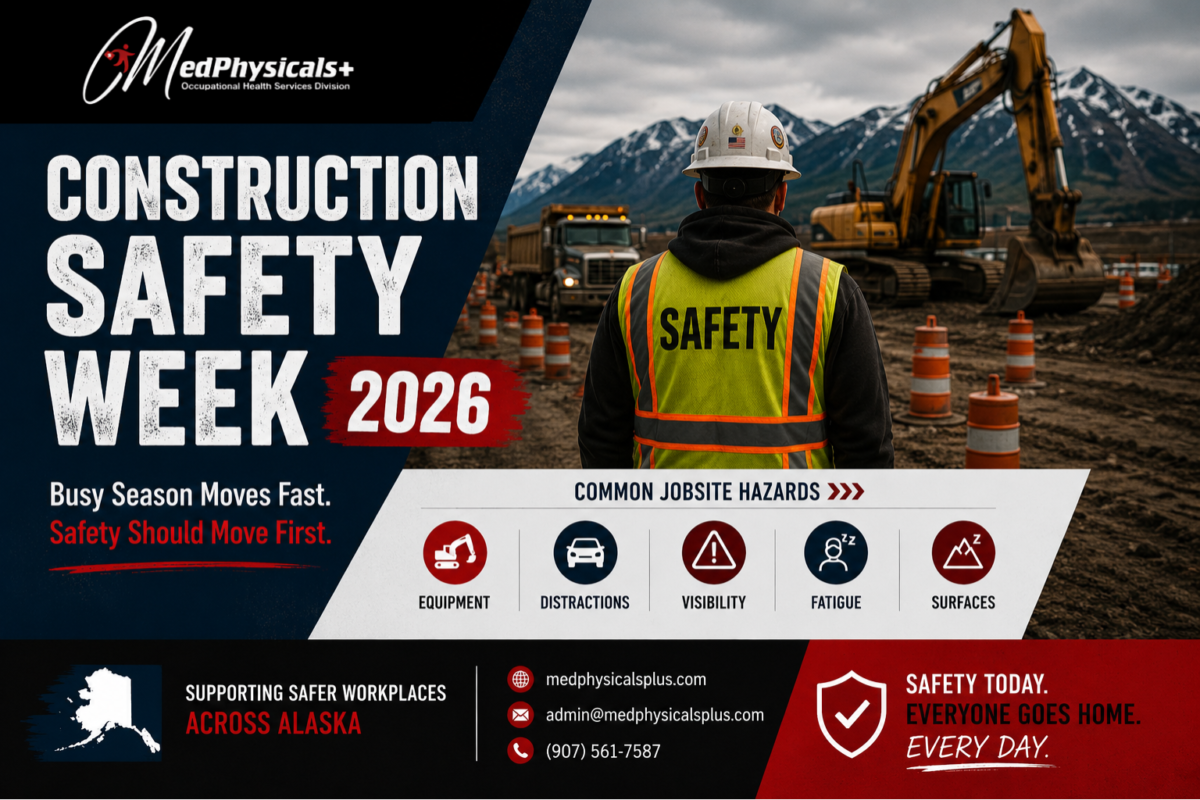
Construction season in Alaska moves fast. As temperatures rise and daylight hours stretch longer, jobsites become more active, project timelines tighten, and crews work longer hours to keep up with demand. But with increased activity comes increased risk.
Work Zone Safety Season is more than a reminder for drivers to slow down around road crews. It is also an opportunity for employers to evaluate how prepared their teams are for the physical, operational, and safety challenges that come with Alaska’s busy construction season.
Why Busy Season Creates Higher Risk
During Alaska’s warmer months, construction activity increases significantly across industries including road work, transportation, utilities, oil and gas support, and commercial development.
As operations ramp up, common workplace hazards also increase, including:
- Heavy equipment operating near workers
- Distracted or speeding drivers near work zones
- Uneven terrain and changing ground conditions
- Reduced visibility from dust, weather, or traffic
- Fatigue caused by long shifts and extended daylight hours
- Pressure to meet aggressive project deadlines
In Alaska, rapidly changing weather conditions can add another layer of unpredictability. A jobsite that appears manageable in the morning can quickly become hazardous due to rain, mud, smoke, wind, or reduced visibility later in the day.
When crews are rushed, fatigued, or understaffed, the likelihood of injuries, near misses, and compliance issues increases.
Worker Readiness Is Part of Workplace Safety
One of the most overlooked parts of construction safety is workforce readiness.
Even strong safety programs can break down if employees are not medically fit for the demands of the job or if preventable issues go unaddressed before peak season begins.
Supporting worker health through occupational health services can help employers:
- Identify medical or physical limitations early
- Reduce delays during hiring and onboarding
- Maintain DOT compliance for regulated drivers
- Support safer equipment operation
- Reduce workplace incidents tied to fatigue, impairment, or untreated health concerns
MedPhysicals Plus, LLC helps employers across Alaska prepare crews for busy season through:
- Pre-employment screenings
- DOT and non-DOT physicals
- Drug and alcohol testing programs
- Occupational health evaluations
- Respirator fit testing
- Mobile and on-site occupational health services
These services help construction and industrial employers keep projects moving while maintaining compliance and workforce safety.
Keeping Safety a Daily Priority
Construction remains one of the industries with the highest rates of workplace injuries and fatalities. That is why safety cannot become a “once-a-year” conversation during peak season.
The most effective employers consistently reinforce:
- Daily safety communication
- Equipment inspections
- Hazard reporting procedures
- Fatigue awareness
- Clear stop-work authority when conditions become unsafe
Sometimes the safest decision on a jobsite is slowing operations down long enough to prevent a serious incident.
Why This Matters for Alaska Employers
Work Zone Safety Season serves as an important reminder that most workplace incidents do not happen because of one major failure. They happen because smaller risks are ignored until they become larger problems.
Employers who proactively address worker readiness, jobsite hazards, and operational safety before peak season are often better positioned to:
- Reduce injuries
- Improve compliance
- Avoid project delays
- Protect employees and the public
- Keep crews productive throughout Alaska’s construction season
MedPhysicals Plus, LLC supports employers throughout Anchorage, Fairbanks, Wasilla, and Soldotna.
For more information, visit MedPhysicalsPlus.com, email admin@medphysicalsplus.com, or call (907) 561-7587.