
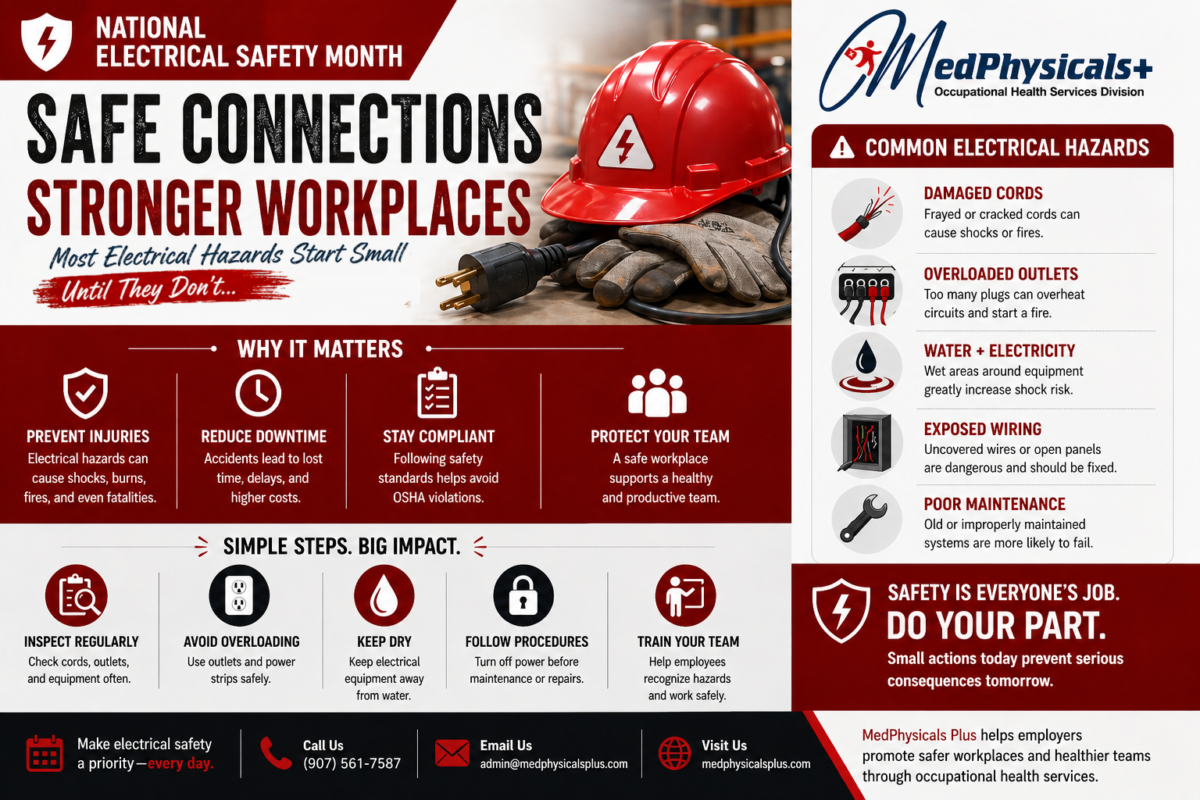
Common Electrical Hazards in Shops, Clinics, Warehouses, and Jobsites
Electrical hazards are one of the most common workplace safety risks — and often one of the easiest to overlook until an accident occurs. National Electrical Safety Month serves as an important reminder for employers to pay attention to the everyday electrical issues that can lead to shocks, burns, fires, equipment damage, or serious workplace injuries.
These hazards are not limited to construction sites. They can affect nearly every type of workplace, including clinics, warehouses, repair shops, offices, industrial facilities, and transportation operations across Alaska.
Common Electrical Risks Employers Often Miss
Many workplace electrical incidents begin with small issues that gradually become larger safety problems over time.
Common hazards include:
- Damaged extension cords or power cables
- Overloaded outlets and power strips
- Exposed or deteriorating wiring
- Improper grounding of equipment
- Electrical equipment used near water or wet conditions
- Unsafe use of temporary wiring
- Poorly maintained panels or breaker systems
- Lack of lockout/tagout procedures during maintenance
In Alaska’s demanding work environments, weather, moisture, cold temperatures, and heavy equipment use can place additional strain on electrical systems. Older facilities or poorly maintained infrastructure may increase the likelihood of electrical failures or workplace incidents.
PPE and Employee Readiness Matter Too
For employees working near energized systems or performing electrical tasks, proper personal protective equipment (PPE) plays an important role in reducing risk.
Depending on the work environment, this may include:
- Insulated gloves
- Arc-rated protective clothing
- Face shields
- Eye protection
- Electrically rated footwear
However, PPE only works when employees are medically able to safely wear and use it correctly. Occupational health evaluations can help determine whether workers are physically capable of safely using required protective equipment, especially in physically demanding or safety-sensitive roles.
According to Occupational Safety and Health Administration, many electrical injuries can be prevented through:
- Routine inspections
- Preventive maintenance
- Employee safety training
- Hazard awareness
- Proper use of PPE
Why Electrical Safety Matters for Employers
Electrical incidents can quickly become expensive and disruptive for businesses. Beyond employee injuries, employers may also face:
- Operational downtime
- Equipment damage
- OSHA citations
- Workers’ compensation claims
- Increased insurance costs
- Liability exposure
In industries such as healthcare, transportation, construction, warehousing, and manufacturing, even a small electrical issue can escalate into a serious safety event if ignored.
Simple preventive steps can significantly reduce risk, including:
- Replacing damaged cords immediately
- Avoiding overloaded outlets
- Keeping electrical systems dry and properly maintained
- Training employees to recognize hazards early
- Following lockout/tagout procedures consistently
The National Fire Protection Association also emphasizes the importance of routine maintenance and safe electrical practices as part of an effective workplace safety program.
Final Takeaway
Many electrical hazards start as minor issues that are ignored until they become major problems. National Electrical Safety Month is a good opportunity for employers to review workplace safety practices, inspect equipment, and address preventable risks before injuries occur.
MedPhysicals Plus, LLC supports employers throughout Anchorage, Fairbanks, Wasilla, and Soldotna with occupational health evaluations and workplace safety support designed to help businesses maintain safer and more compliant operations.
To learn more, visit MedPhysicalsPlus.com, email admin@medphysicalsplus.com, or call (907) 561-7587.