
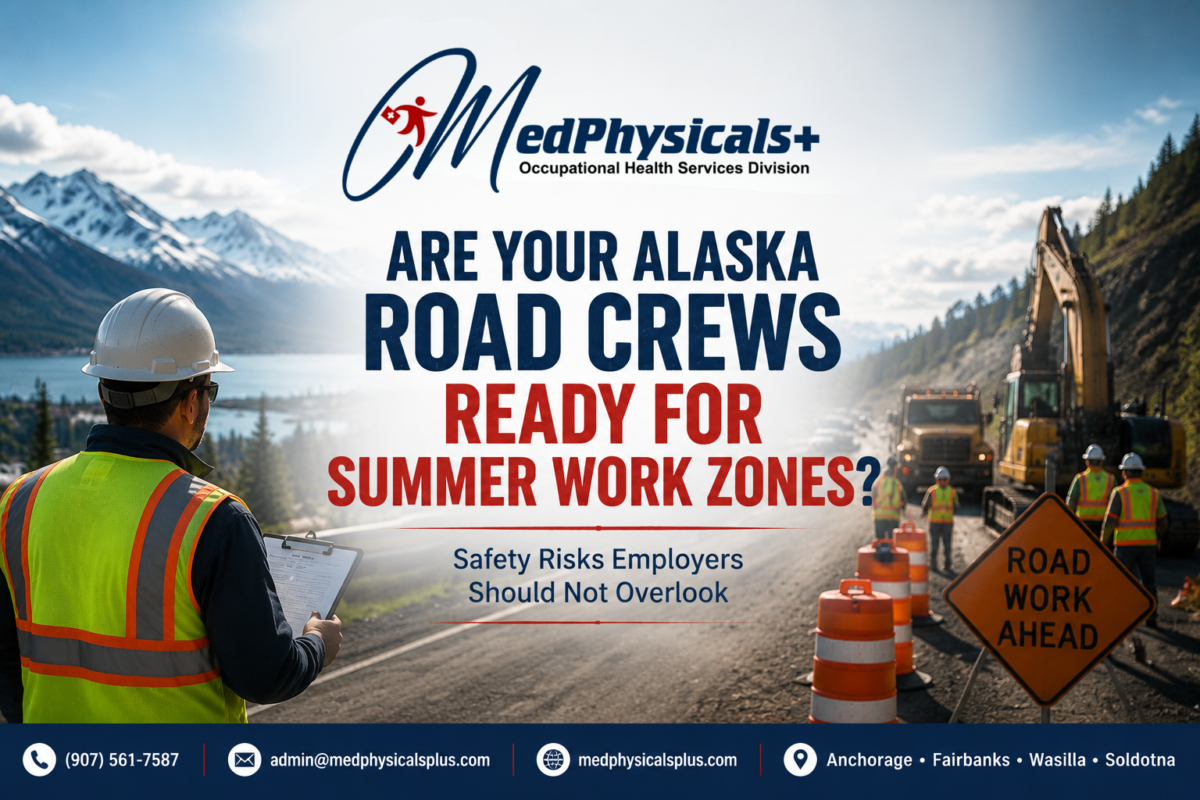
Many employers understand that summer brings an increase in road construction and maintenance projects across Alaska. However, one important safety concern can be overlooked: protecting employees who work near active traffic, heavy equipment, and changing work conditions.
Road crews, flaggers, and equipment operators work in environments where a mistake, distraction, or failure to follow work zone procedures can increase safety risks for workers and drivers. A safe work zone requires more than completing the project. It requires proper planning, training, and procedures that help protect workers throughout the job.
Work Zones Create Changing Hazards for Employees
Highway and road construction areas are constantly changing. Workers may be exposed to moving vehicles, construction equipment, temporary traffic patterns, and other hazards throughout the workday.
OSHA recommends hazards in highway work zones and provides guidance on work zone safety, including traffic control measures, signs, barricades, flagging procedures, and worker safety resources.
For Alaska employers, summer projects can involve changing jobsite conditions and complex work environments that require careful planning. Preparing employees before work begins helps create a safer work environment.
Flagger Safety Depends on Visibility and Communication
Flaggers play an important role in maintaining safety around active road projects. They help direct traffic, communicate changes, and support safer movement of vehicles through work zones.
Because flaggers work close to moving traffic, proper visibility, signage, traffic control devices, and clear communication are essential. Drivers and workers must follow established procedures to help reduce risks. These traffic control practices help create safer conditions for both workers and motorists in active work zones.
Protecting Road Crews Around Traffic and Equipment
Road crews often work near vehicles, trucks, and heavy equipment. Without proper precautions, these conditions can create additional workplace hazards.
Employers can help protect workers by reviewing jobsite hazards, providing appropriate training, maintaining communication, and ensuring employees use required protective equipment.
A safe work zone is not only about providing equipment. It is about making sure employees understand the hazards around them and know how to work safely.
Drivers Also Play a Role in Work Zone Safety
Work zone safety is a shared responsibility. Drivers who speed, become distracted, or ignore traffic control instructions can put workers and other motorists at risk.
Slowing down, following signs, paying attention to flaggers, and staying alert can help create safer conditions for everyone traveling through the area.
Preparing Alaska Workers Before Peak Summer Projects
Summer projects often move quickly, but safety preparation should happen before employees arrive at the jobsite. Making sure workers are trained, prepared for the demands of their role, and supported by a strong occupational health program helps create safer worksites.
At MedPhysicals Plus, we support Alaska employers with occupational health services including DOT physicals, drug and alcohol testing, fit-for-duty evaluations, physical abilities testing, and other workplace health solutions. Whether your employees are working on highways, construction projects, or remote worksites, having a prepared workforce helps protect your team and keeps projects moving safely.
We work with employers across Alaska, with locations in Anchorage, Fairbanks, Wasilla, or Soldotna. To learn more about employer services, contact MedPhysicals Plus at admin@medphysicalsplus.com, call (907) 561-7587, or visit medphysicalsplus.com.