
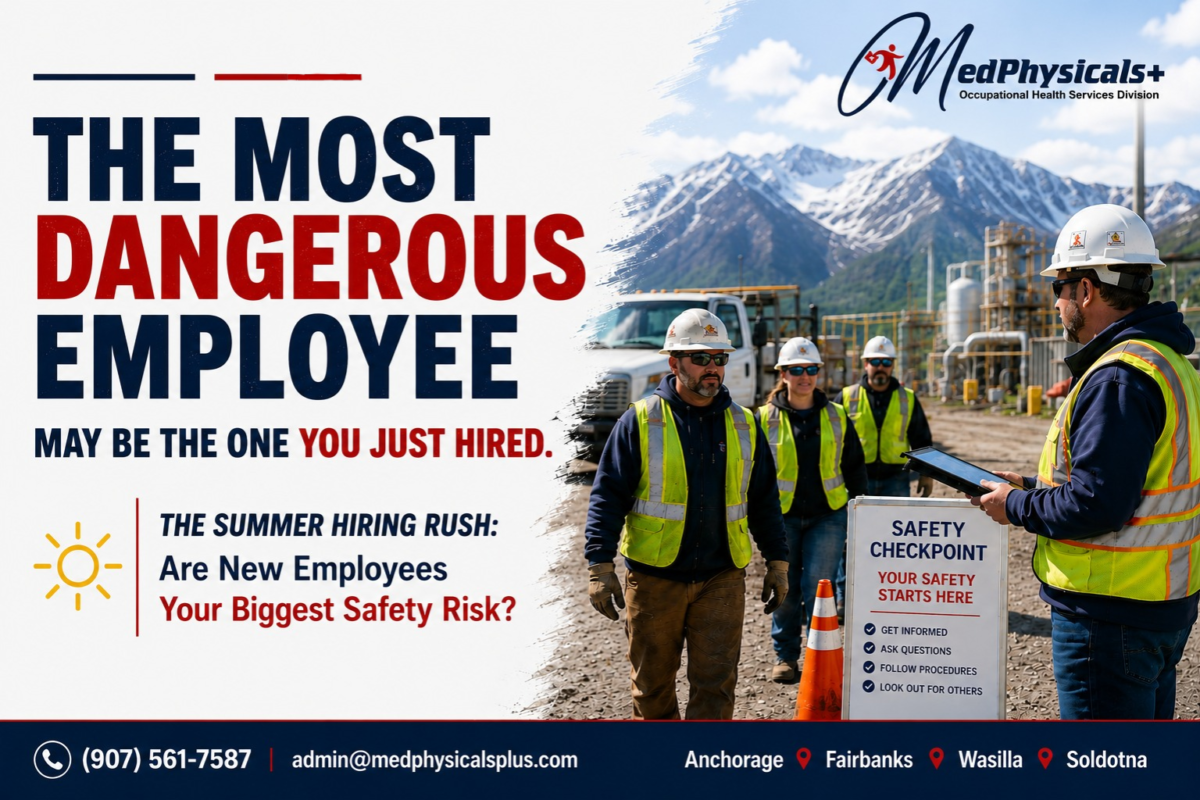
The Most Dangerous Employee May Be the One You Just Hired
When employers think about workplace safety, they usually think about equipment, weather, job sites, or hazardous tasks. But during a busy hiring season, one of the biggest risks can be the employee who just started.
This is especially important in Alaska, where summer hiring often increases in industries like construction, tourism, transportation, etc. When new workers are brought in quickly, they may not fully understand the hazards, procedures, equipment, or safety expectations yet.
Why Are New Employees More Likely to Get Injured?
New employees are still learning how the workplace actually works. They may not know which areas are dangerous, when to ask for help, how to report a concern, or what to do when something feels unsafe.
This does not mean they are careless. It means they are new. Research has found that injury risk is highest during a worker’s first month on a new job.
What Makes Summer Hiring More Risky?
Summer hiring often happens fast. Employers need more people, schedules get busier, and training can feel like something to rush through.
That is where problems can start. A new worker may be hired quickly, placed into a physical or safety-sensitive role, and expected to keep up before they fully understand the job.
What Should New Hire Safety Training Include?
New hire safety training should be clear, practical, and specific to the job. It should explain workplace hazards, emergency steps, injury reporting, personal protective equipment, equipment rules, and who to contact with questions.
The goal is not just to say safety matters. The goal is to show employees what safe work looks like before they are expected to work on their own.
Why Pre-Employment Screenings Matter
Some safety requirements begin before an employee’s first day on the job. Depending on the position, employers may be required to complete screenings such as DOT physicals, drug and alcohol testing, or respirator medical evaluations before an employee performs certain job duties.
These screenings help employers meet regulatory requirements and support a safer workplace. While they do not replace orientation or safety training, they can help determine whether employees are medically qualified for specific job responsibilities before work begins.
Before the First Shift Is When Safety Starts
Fast hiring may be part of Alaska’s summer rush, but a rushed start can create safety risks later. New employees are not automatically unsafe. They are still learning the work, the hazards, and the expectations.
That is why new hire safety should start before the first shift. Proper orientation, job-specific safety training, clear supervision, and required pre-employment screenings can help employers reduce risk and prepare workers for the job.
MedPhysicals Plus supports Alaska employers with new hire readiness services, including DOT physicals, pre-employment drug and alcohol testing, respirator medical evaluations, and other occupational health services. With locations in Anchorage, Fairbanks, Wasilla, or Soldotna, you can contact us at (907) 561-7587 or admin@medphysicalsplus.com to help keep hiring moving while supporting a safer start for new employees.