
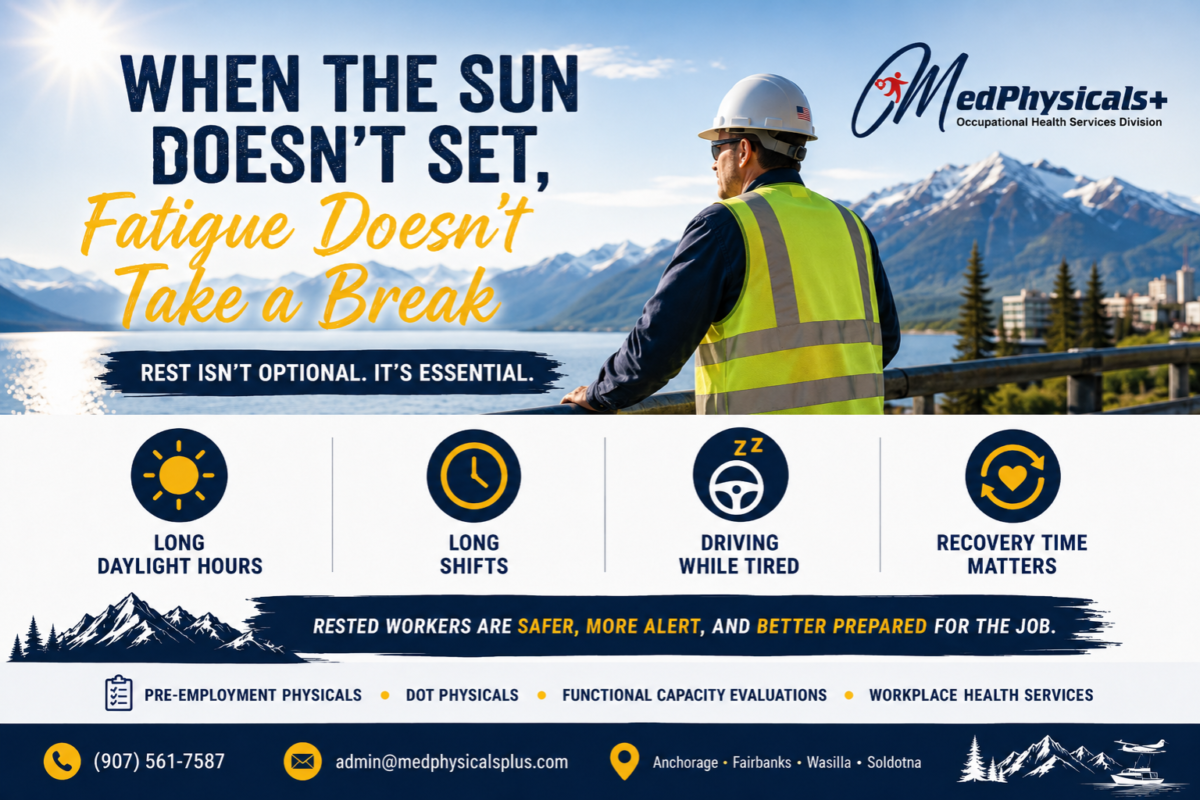
When Long Daylight Affects Worker Alertness
Alaska summers make it easier to stay busy. The days are longer, the weather is better, and many people want to make the most of the season after work. That might mean fishing, camping, hiking, traveling, or staying outside later than usual.
The challenge is that more daylight does not mean the body needs less rest. When employees work long shifts and stay active late into the evening, fatigue can build up and carry into the next workday.
Why Summer Fatigue Is a Workplace Safety Risk
During the summer, parts of Alaska experience very long daylight hours. Anchorage can see 16 to 19 or more hours of daylight from May through July, while Fairbanks can experience 24 hours of daylight for about 70 days from mid-May through mid-July.
That much daylight can make the day feel longer than it really is. Employees may feel like they have more time and energy, but their bodies still need sleep and recovery. Without enough rest, focus, reaction time, judgment, and decision-making can be affected.
How Fatigue Impacts Long Shifts and Safety-Sensitive Work
Fatigue can be especially important in safety-sensitive work such as construction, oilfield operations, transportation, aviation, marine work, and seasonal labor, especially when schedules involve long shifts, driving, equipment use, physical labor, or quick decisions. OSHA notes that long work hours and extended or irregular shifts can increase fatigue and safety risks.
Driving while tired is also a serious concern, especially for those who drive between job sites, operate company vehicles, or travel after extended shifts. NIOSH notes that long shifts, insufficient sleep, and long distances traveled to well sites can contribute to fatigued driving in oil and gas work. Fatigue can also make it harder to stay alert around equipment, vehicles, changing weather, uneven ground, and high-risk tasks.
Worker Fatigue Warning Signs That Should Not Be Ignored
Fatigue does not always look the same for every employee. For drivers, warning signs can include drifting from a lane, hitting a rumble strip, frequent blinking, or struggling to stay focused.
In the workplace, fatigue may show up as slower reactions, repeated mistakes, irritability, low energy, heavy eyes, or seeming more distracted than usual. These signs should not be ignored.
Adding Fatigue Prevention to Your Summer Safety Plan
Fatigue should be part of the summer safety conversation. Workplaces can help by reviewing long shifts, watching overtime patterns, allowing enough recovery time between shifts, and being realistic about driving after long workdays.
A simple summer fatigue check can include looking at back-to-back overtime, driving expectations, recovery time between shifts, and reminding employees to speak up if they feel too tired to work or drive safely.
Why Rested Workers Are Safer Workers
Alaska’s long summer days are one of the best parts of the season, but they can also make fatigue easier to overlook. Rested workers are more alert, more focused, and better prepared to do the job safely.
MedPhysicals Plus supports employers with occupational health services that help keep teams safe, ready, and compliant, including pre-employment physicals, DOT physicals, Functional Capacity Evaluations, and other workplace health services that help assess whether employees are ready for the physical demands of the job. For support in Anchorage, Fairbanks, Wasilla, or Soldotna, contact MedPhysicals Plus at (907) 561-7587 or admin@medphysicalsplus.com