
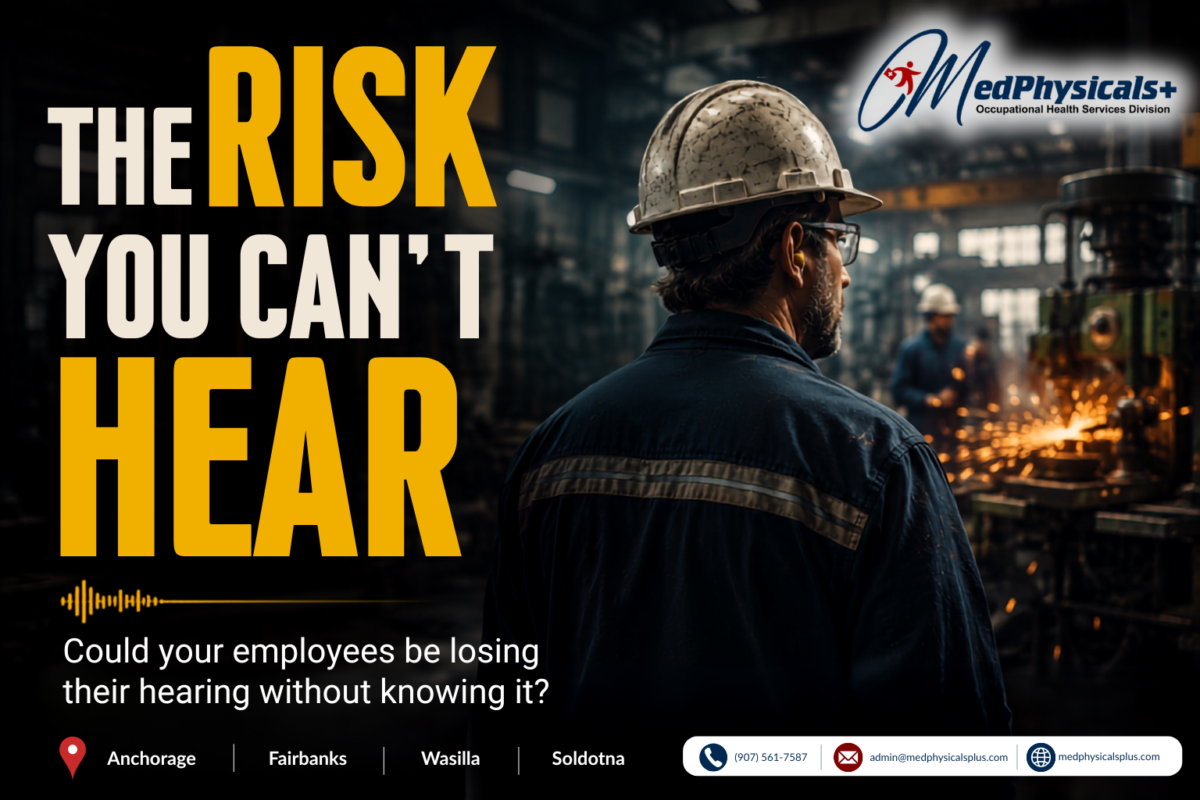
Hearing loss is one of the most common work-related health conditions. Unlike a sudden injury, noise-induced hearing loss develops gradually. Employees may not notice changes until conversations become difficult, warning signals are missed, or hearing has already been permanently affected.
Because hearing loss can occur over time, employers should implement a hearing conservation program that includes more than hearing protection alone. An effective program helps identify occupational noise exposure and protect employee hearing before lasting damage occurs. According to OSHA and NIOSH, occupational hearing loss is largely preventable when workplace noise is properly managed.
Hearing Protection Is Only Part of the Solution
Earplugs and earmuffs help reduce noise exposure, but they are only one part of a hearing conservation program. OSHA requires employers to implement a hearing conservation program when employees are exposed to an eight-hour time-weighted average noise level of 85 decibels or higher. The program includes noise monitoring, hearing protection, employee training, and audiometric testing.
Without routine hearing tests, employers may not know whether workplace noise is affecting employees over time.
Baseline and Annual Audiometric Testing Matter
Audiometric testing measures an employee’s hearing. OSHA’s hearing conservation requirements include a baseline audiogram for covered employees and annual audiograms that can be compared with that baseline. Hearing protection reduces exposure to hazardous noise. Both are essential, but they serve different purposes.
Routine audiometric testing helps identify changes in an employee’s hearing over time, allowing employers to evaluate the effectiveness of their hearing conservation program and take corrective action when appropriate.
Which Employees Are Most at Risk?
Employees who work around loud machinery, power tools, engines, heavy equipment, or other high-noise environments may be at greater risk for occupational hearing loss. This commonly includes construction, manufacturing, transportation, warehousing, mining, oil and gas, aviation, and marine industries.
Repeated exposure to workplace noise at or above 85 decibels over an eight-hour workday can increase the risk of permanent hearing loss if appropriate controls are not in place.
Protect Employee Hearing Before Permanent Damage Occurs
Noise-induced hearing loss is usually permanent, but it is also preventable. A hearing conservation program that includes baseline and annual audiometric testing, hearing protection, employee training, and workplace noise monitoring helps employers protect their workforce and support OSHA compliance.
At MedPhysicals Plus, we help employers across Alaska support their hearing conservation programs through occupational audiometric testing. Whether your employees work in construction, manufacturing, transportation, oil and gas, or other high-noise environments, routine hearing testing can help identify changes early and protect employee hearing over time.
We work with employers across Alaska, with locations in Anchorage, Fairbanks, Wasilla, or Soldotna. To learn more about our occupational audiometric testing services, contact MedPhysicals Plus at admin@medphysicalsplus.com, call (907) 561-7587, or visit medphysicalsplus.com.