
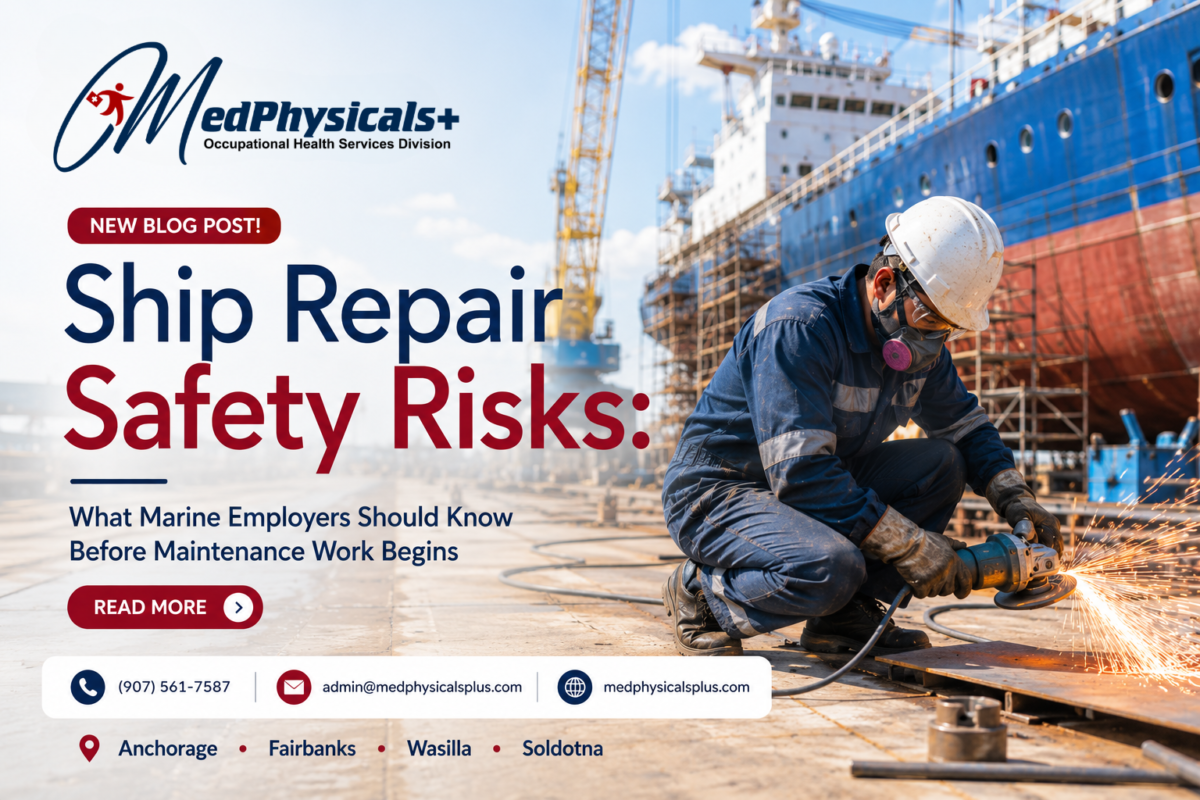
Summer is a busy time for ship repair and marine maintenance. Crews may be performing welding, cutting, painting, cleaning, and equipment repairs to prepare vessels for operation. While these tasks are necessary, they can also expose workers to serious safety risks if hazards are not properly identified and controlled.
Ship repair environments often involve multiple activities happening at the same time. Workers may face risks from hot work, falls, hazardous materials, and airborne particles during surface preparation. Understanding these hazards before work begins helps employers protect their crews and create safer worksites.
Hot Work Creates More Than Just a Fire Risk
Welding, cutting, and other hot work activities are common during ship repairs. These tasks create heat, sparks, and flames, which can become dangerous when they come into contact with flammable materials or areas that are not properly prepared.
OSHA emphasizes the importance of evaluating the work area before hot work begins. Employers should make sure hazards are controlled, proper precautions are in place, and workers understand the procedures required for the job. Good planning can help prevent fires, injuries, and costly disruptions.
Working at Heights Can Create Fall Hazards
Many marine maintenance projects require employees to work on elevated surfaces or use ladders and other access equipment. Because vessels have unique layouts and limited working areas, fall prevention requires careful attention.
A fall does not always happen because of a major mistake. Unsafe access points, poor equipment conditions, or cluttered work areas can increase the risk. Employers should make sure workers have safe access, equipment is maintained, and employees are trained on proper practices before performing elevated work.
PPE Helps Protect Workers, But It Needs to Match the Job
Personal protective equipment is an important part of shipyard safety, but it is not a one-size-fits-all solution. The protection workers need depends on the hazards involved in the task.
For example, welding may expose employees to sparks, heat, and fumes, while grinding or surface preparation may create dust and flying particles. Choosing the correct PPE helps reduce exposure, but it works best when combined with proper training, hazard controls, and safe work procedures.
Surface Preparation Can Create Hidden Exposure Risks
Before painting, coating, or repairing a vessel, crews often need to prepare surfaces through grinding, sanding, blasting, or removing old coatings. These steps are important for maintenance, but they can also create workplace exposures.
Surface preparation can release dust, particles, and other materials into the air depending on the products and methods being used. Employers should evaluate the work environment and make sure employees have the appropriate protection, including respiratory protection when necessary.
A Safer Ship Repair Process Starts Before Work Begins
Ship repair will always involve challenging tasks, but many workplace injuries can be reduced with proper preparation. Identifying hazards, providing training, maintaining equipment, and selecting the right protective measures are all important parts of keeping marine workers safe.
A strong safety program is not only about meeting requirements. It is about making sure employees have the protection they need to complete their work safely.
MedPhysicals Plus helps employers support workplace safety through occupational health services including respirator medical evaluations and respirator fit testing to help ensure workers are medically cleared and properly protected when respiratory protection is required.
To learn more about employer services, visit medphysicalsplus.com or contact MedPhysicals Plus at admin@medphysicalsplus.com or (907) 561-7587. We serve employers throughout Alaska with locations in Anchorage, Fairbanks, Wasilla, or Soldotna.