
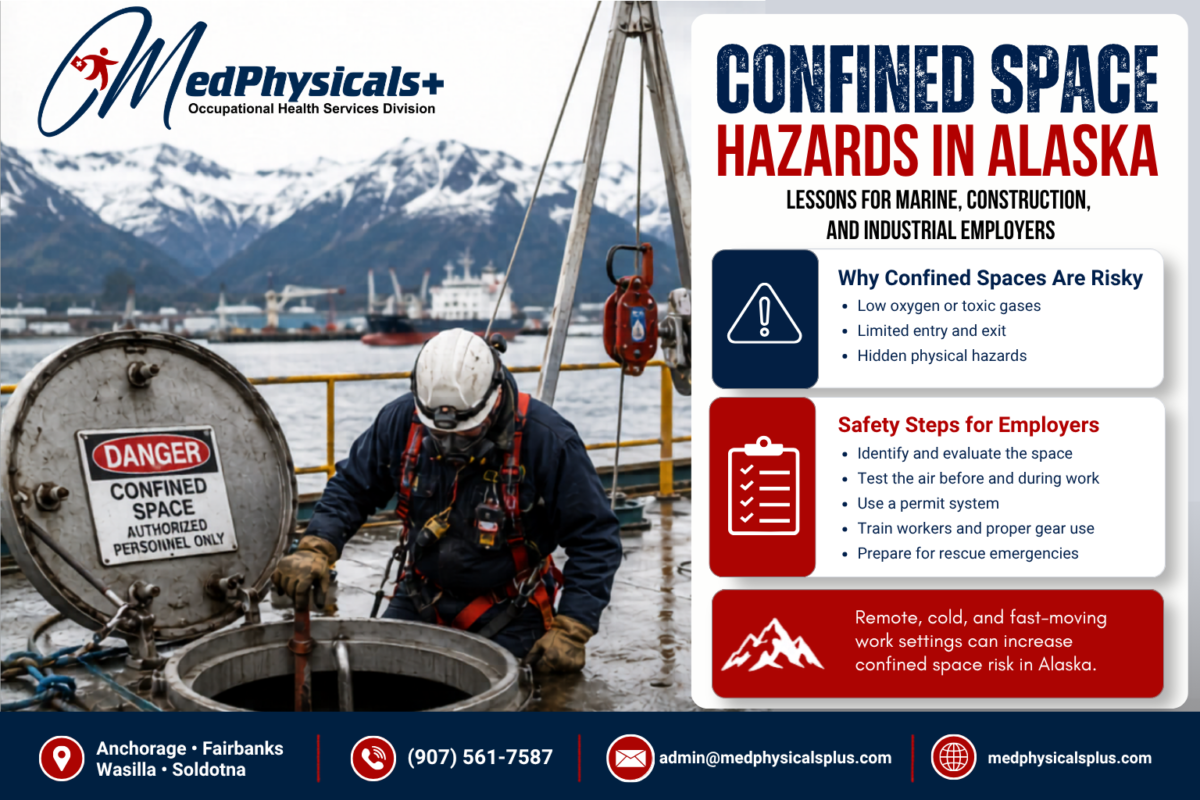
Working in confined spaces can be dangerous if proper safety steps are not followed. In Alaska, marine, construction, and industrial jobs often involve tight areas where air may be unsafe or hazards are hidden. Understanding these risks helps employers keep workers safe.
What Is a Confined Space
A confined space is an area a worker can enter and perform tasks but has limited entry and exit points and is not designed for continuous occupancy. Examples include tanks, pits, utility vaults, sewers, and ship compartments. These spaces may contain unsafe air or hidden physical hazards.
Why Confined Spaces Are Risky
Confined spaces are hazardous when:
- Oxygen levels are too low.
- Toxic or flammable gases are present.
- Workers can be trapped by equipment or materials.
In Alaska, conditions like cold, remote locations, and changing marine or industrial environments make these hazards more dangerous.
Safety Steps for Employers
- Identify and Evaluate – Determine if a space is confined and whether it needs a permit.
- Test the Air – Measure oxygen and gases before and during work.
- Permit System – Document hazards, controls, and allow only trained workers inside.
- Train Workers – Ensure employees know hazards, use gear correctly, and can exit safely.
- Rescue Planning – Have trained personnel and equipment ready for emergencies.
Keeping Workers Safe in Alaska
Alaska’s remote, cold, and fast-moving work settings make confined spaces particularly risky. Following safety rules, testing air, training workers, and having emergency plans reduces injuries and fatalities.
Understanding confined space hazards is critical for keeping workers safe. MedPhysicals Plus helps Alaska employers with workplace safety, training, and occupational health support to manage these risks effectively.
You can contact them at (907) 561-7587 or admin@medphysicalsplus.com, with services available in Anchorage, Fairbanks, Wasilla, or Soldotna. Learn more at medphysicalsplus.com.